
Short Circuits #15
A roundup of recent vaguely energy-related stories

A final reminder that we’re hosting a trivia event in conjunction with Australian Energy Week. There’ll be prizes, food and head scratching energy questions (head scratching as in… is that really an energy question?)
6 pm Tuesday 9th June, at The Decks at The Boatbuilders Yard
Tickets are available here: https://events.humanitix.com/aew-currently-speaking-trivia.
As of writing there are 15 tickets remaining, so if you’d like to come, don’t delay! When they’re gone they’re gone.
We’re excited to be working Australian Energy Week. AEW is Australia’s premier energy event — with high quality talks from the most important movers in the industry, specialised pre-conference masterclasses for participants looking to up-skill and networking opportunities across the halls (and across the road at The Boatbuilders 😏)
Lady Liddell
Yesterday, Tuesday 26 May 10:59AM, AGL knocked down the stacks at Liddell Power Station via controlled explosion. Liddell was decommissioned in 2023 after a solid 50 years of service. There’s plenty more work to do, but the demolition of the chimneys is one of the more visible and dramatic parts of the overall site rehabilitation.
AGL livestreamed the stacks coming down, and including a brief and slightly asinine corporate video about Lady Liddell’s history. They neglected to mention the brain-eating amoeba in Lake Liddell, but I suppose it was otherwise informative.
The video is below; if you’re impatient to skip to the good bit, the stacks come down about 3 minutes from the end of the livestream.
If you’d like to dive deeper into Liddell, the Yesterday New Future (Liddell) photographic exhibit is a nice little visual exploration of the power station. Artist Todd Fuller also documented the closure through a series of portraits in 2023 (it’s not often high art crosses this newsletter!).
And for a more technical overview Ken Thornton, a retired power station operator with the Electricity Commission of NSW, completed a PhD thesis which has great detail on Liddell’s significance within the history of the ECNSW.1
Copper in the circular economy
Copper prices are up, which can only mean one thing. Copper theft!
From the I Take Pictures of Power Systems Facebook group (closed group), a Citipower/Powercor/UE linesman has been documenting some of the more brazen thefts across his patch.
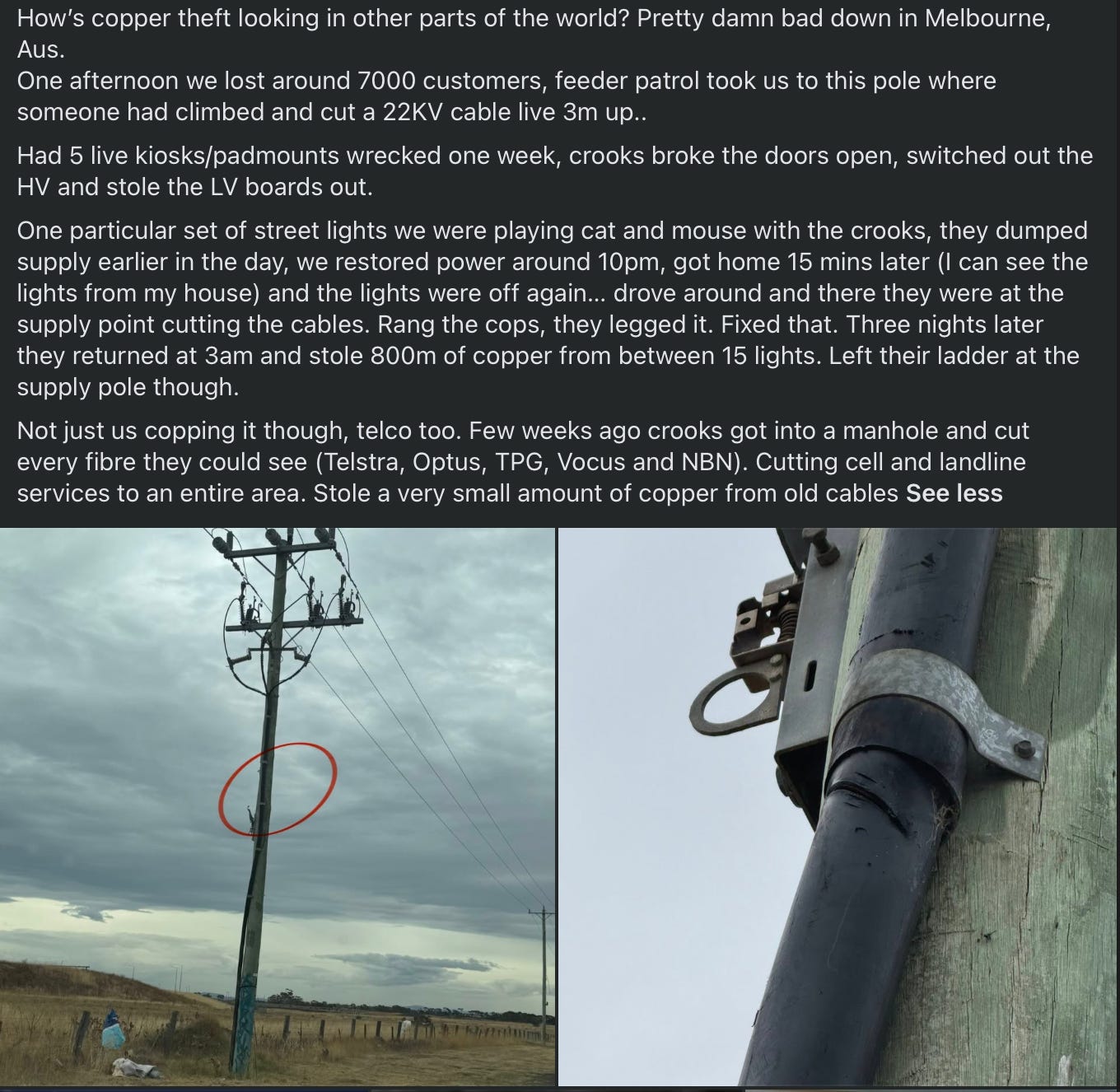
Do you want to risk your life and/or test the effectiveness of the 22kV protection systems for the chance of haggling with a shady Marketplace dealer over a few hundred dollars? Have I got a business opportunity for you!
If you’re worried that this phenomenon might be confined to the methheads of Melbourne, fear not! Gangs in Chile have got the process of stealing copper from solar farms down to a refined art.2
Who said solar panels couldn’t be recycled.
Trump’s media fusion
ICYMI, late last year Trump Media – the parent company of the social media platform from which the President of the United States goes on totally normal midnight posting sprees, Truth Social – announced that it would merge fuse with TAE Technologies, a Californian fusion energy company for US$6 Billion. Covfefe
TAE Technologies sounds like it’s doing genuinely interesting research into fusion, so it makes perfect sense that it would merge with a financially successful social media company. Bigly.
Will this merger bring us a decade closer to fusion?3 Maybe? I’m sure this Wikipedia category page means nothing though.
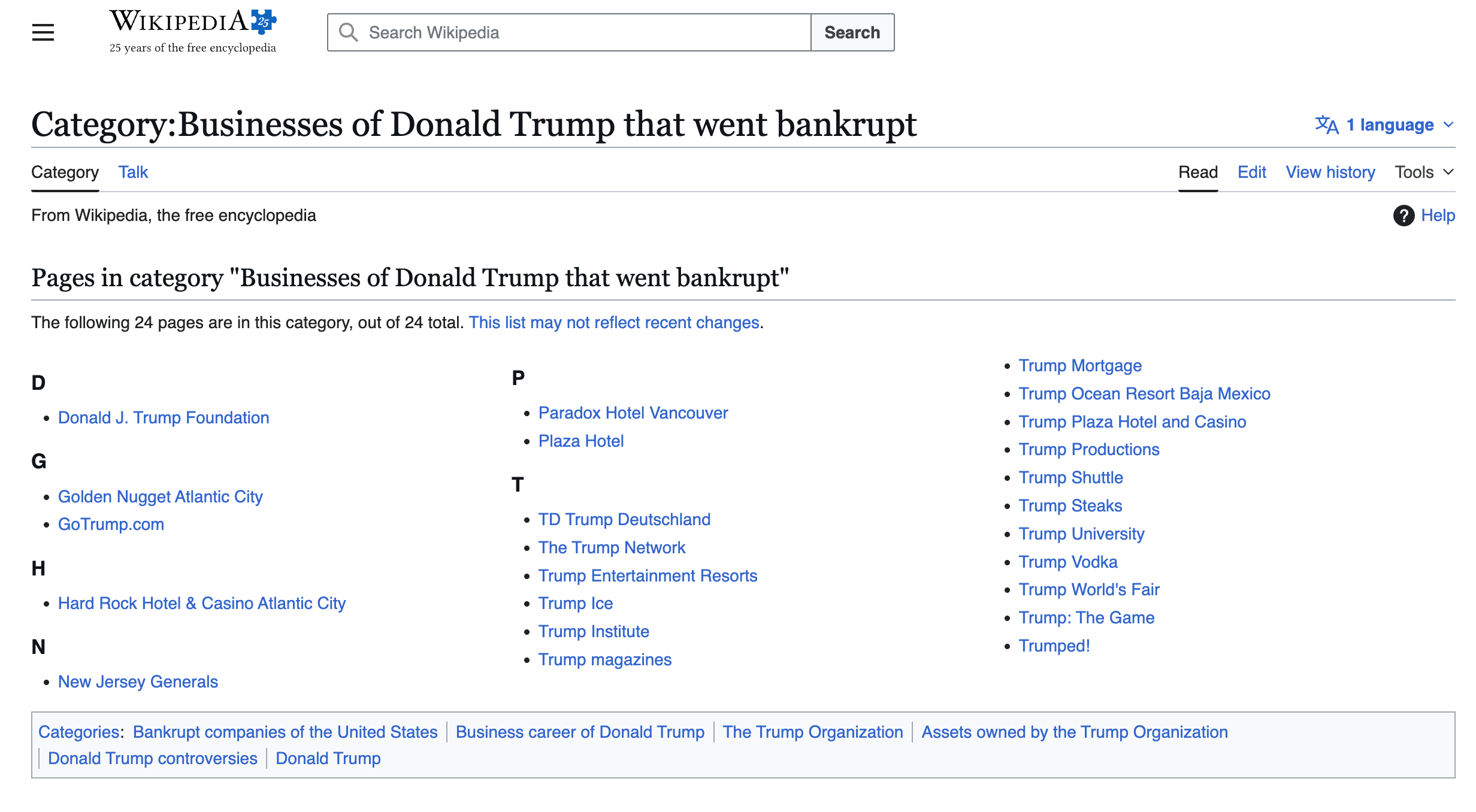
Is it weird that a social media company associated with the American President is suddenly announcing its involvement in fusion energy? Yes.
But is it weirder than a shoe company pivoting to AI? 🤷♂️
High voltage music
Short Circuits #14 was all about music videos with some connection to electricity. One of our fearless kiwi correspondents Marcel P. introduced us to this absolute banger from KEPCO, the Korean state-owned electricity utility.
This video is absolute fire. 10/10.
I believe the video was made to promote KEPCO’s work on a 500 kV HVDC backbone linking a complex of large thermal power stations on the east of the country with Seoul, which constitutes 40% of the country’s power requirements. Korea has had existing undersea HVDC cables to Jeju Island since 1996.
The music video is a parody of and homage to a successful campaign by the Korean Tourism Organisation. They’re absolute fire.
How’s the serenity?
The Facebook algorithm decided that I wanted to see this, which, I don’t, but it does make for good #content.4
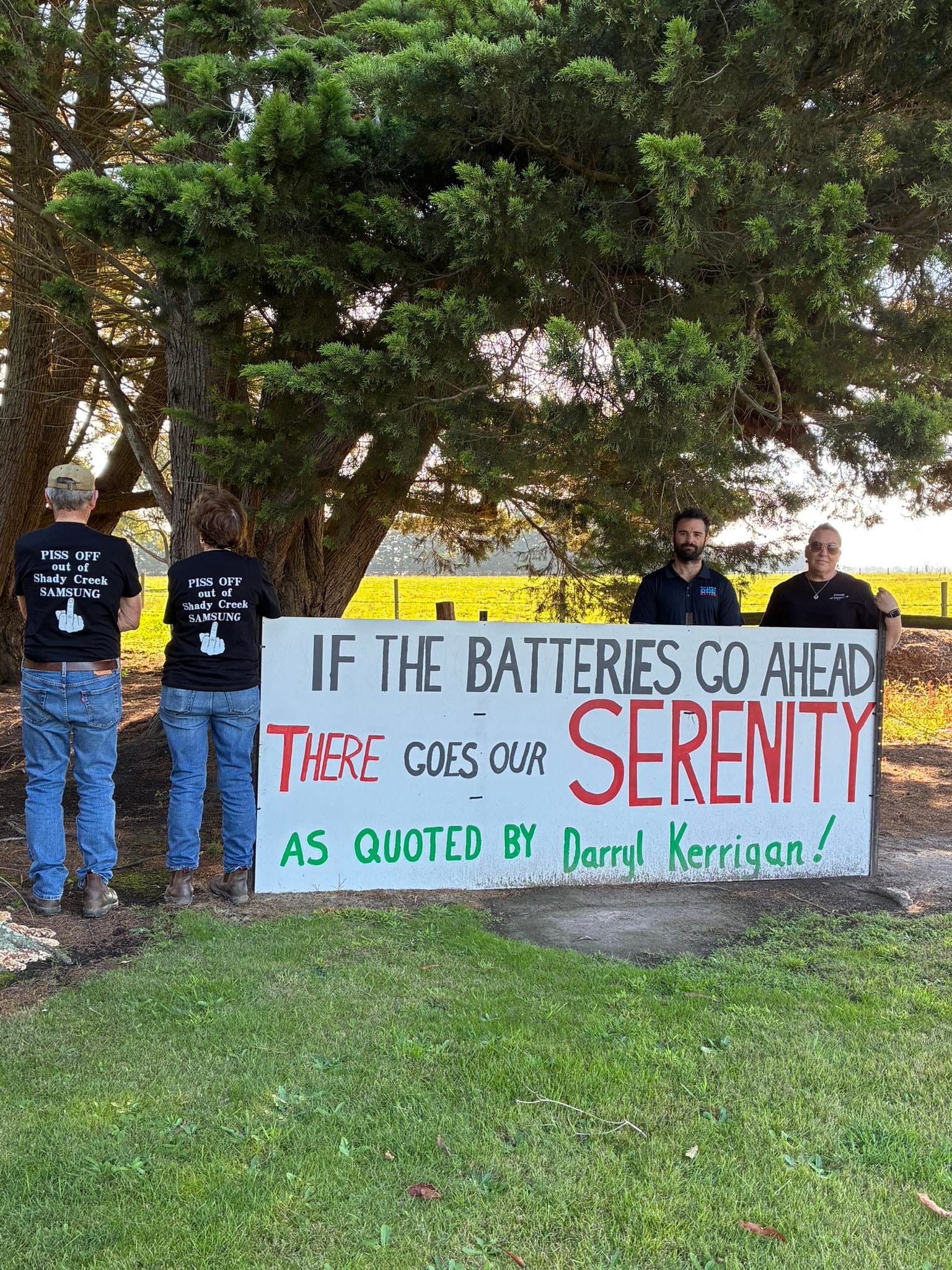
Councillor Ben Lucas of the Baw Baw Shire posted the above accompanied by an anti-Net Zero rant and a threat to “step down tomorrow & continue the fight elsewhere!” if his strong opinions are considered overstepping the mark.
Stepping down from a councillor position feels like an extremely ineffective way to protest development in a region, but sure, go off king. Also given being a councillor is about the cushiest legal way to receive money in this country I’m going to assume he’s unlikely to follow through with this threat and it’s just posturing and vice signalling.5
Based on those charming t-shirts, the offending project iis presumably the proposed 200 MW/800 MWh Darnum BESS, which has proved controversial with some parts of the community.
I don’t know if the project is inappropriate development or not. But what I do know is that it is objectively fucking hilarious to misappropriate a Darryl Kerrigan quote in opposition to an energy infrastructure project.
For the uninitiated, Darryl Kerrigan is the folk hero of the iconic Australia film The Castle, played by Michael Caton. Kerrigan lives a modest but fulfilling life, and embarks on a David and Goliath fight against the airport extension threatening his home.
The key feature of Kerrigan’s personality and a recurring joke throughout the film was that he had no problem living next door to the airport and beneath high voltage powerlines — he saw value where others didn’t. One of the iconic quotes from the film is "He reckons power lines are a reminder of man's ability to generate electricity."
And the “How’s the Serenity” quote is from a scene at their Boonie Doon holiday house… which he bought cheaply because it also sits beneath high voltage transmission lines… which he has no problem with.
So I’m sure that there are upset locals in Baw Baw Shire who feel that they’re embarking on a David and Goliath fight against a renewable energy developer… I’m just not sure Darryl Kerrigan is quite the right fit here.
AI slop
Speaking of Facebook, a few weeks back someone posted in a Facebook group about coffee on Fridays at the “Sir John Monash Museum” as a great chance to catch up and remember the place that was Yallourn.
The Facebook group is dedicated to the subject of the SECV 1.0, and is full of former SECV employees, so talking about John Monash while drinking a coffee in Yallourn is not an unreasonable proposition.
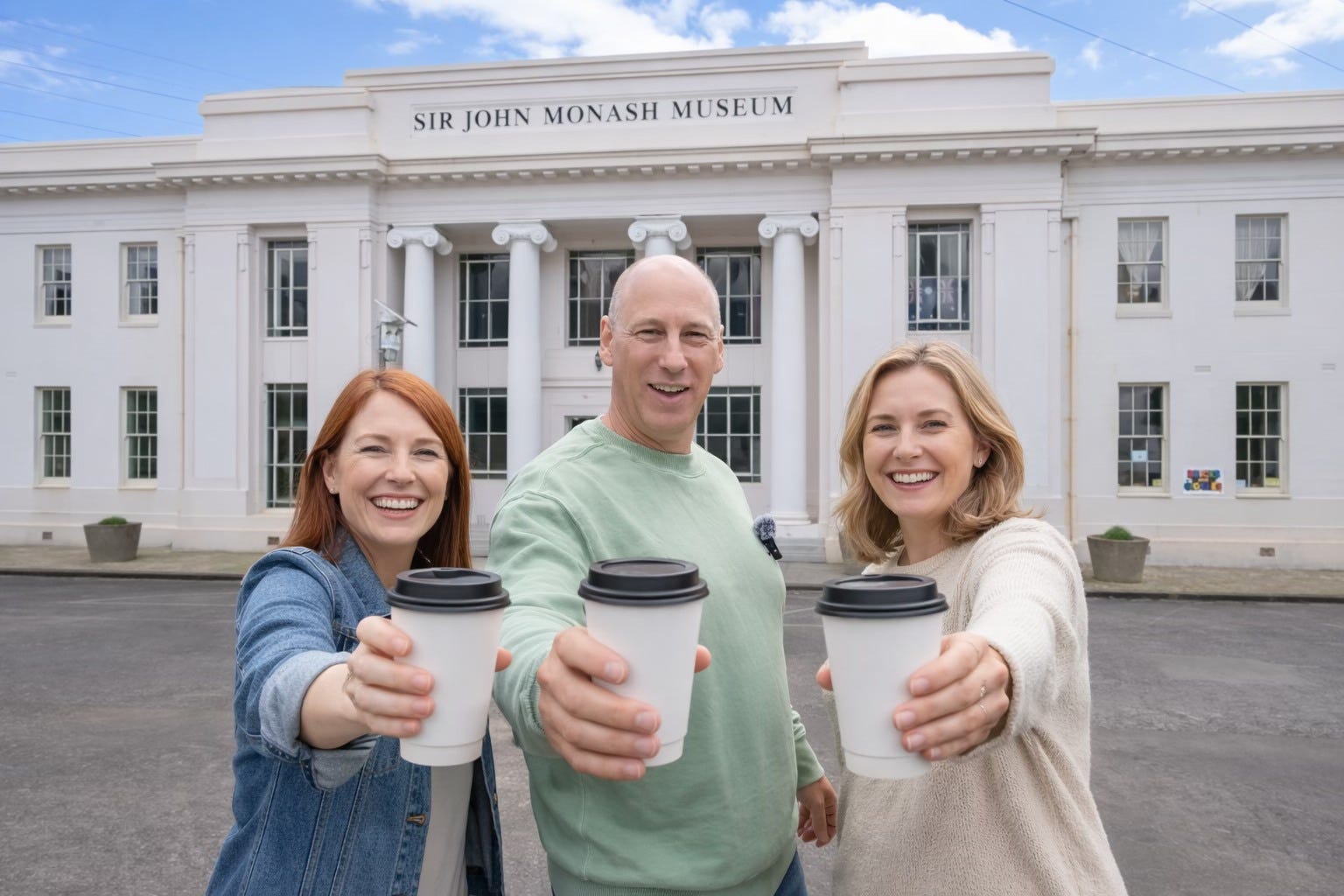
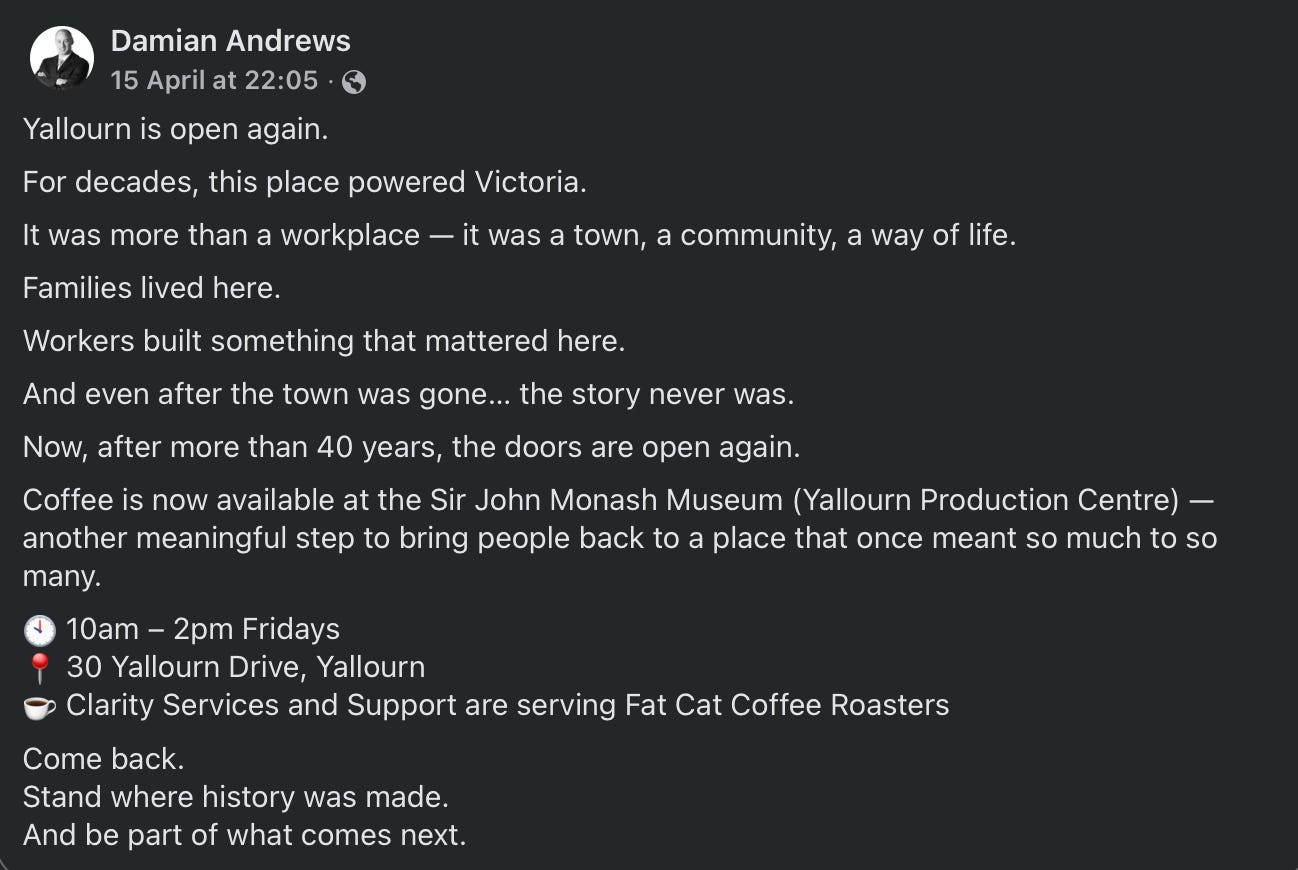
I was immediately intrigued – something was off. The Sir John Monash Museum? Yallourn is a long way from Villers-Bretonneux; and I wasn’t aware of any other museum dedicated to the daddy of the SECV.
Also, those ionic columns? Impressive but not quite in keeping with the architectural choices of the Yallourn, which mostly built its grand buildings in the Moderne style.
On closer inspection those ionic columns look… weird. Misplaced. And there’s something extremely uncanny valley about the people extending their takeaway coffees towards the camera. There’s also someone curious going on with the power lines overhead, like an optical illusion.
Ohhhh, it’s AI slop. I get it. This is Facebook after all.
But where is 30 Yallourn Dr? Is that a real place?
That bit’s real. It’s just uh, a little bit different from the advertisement…
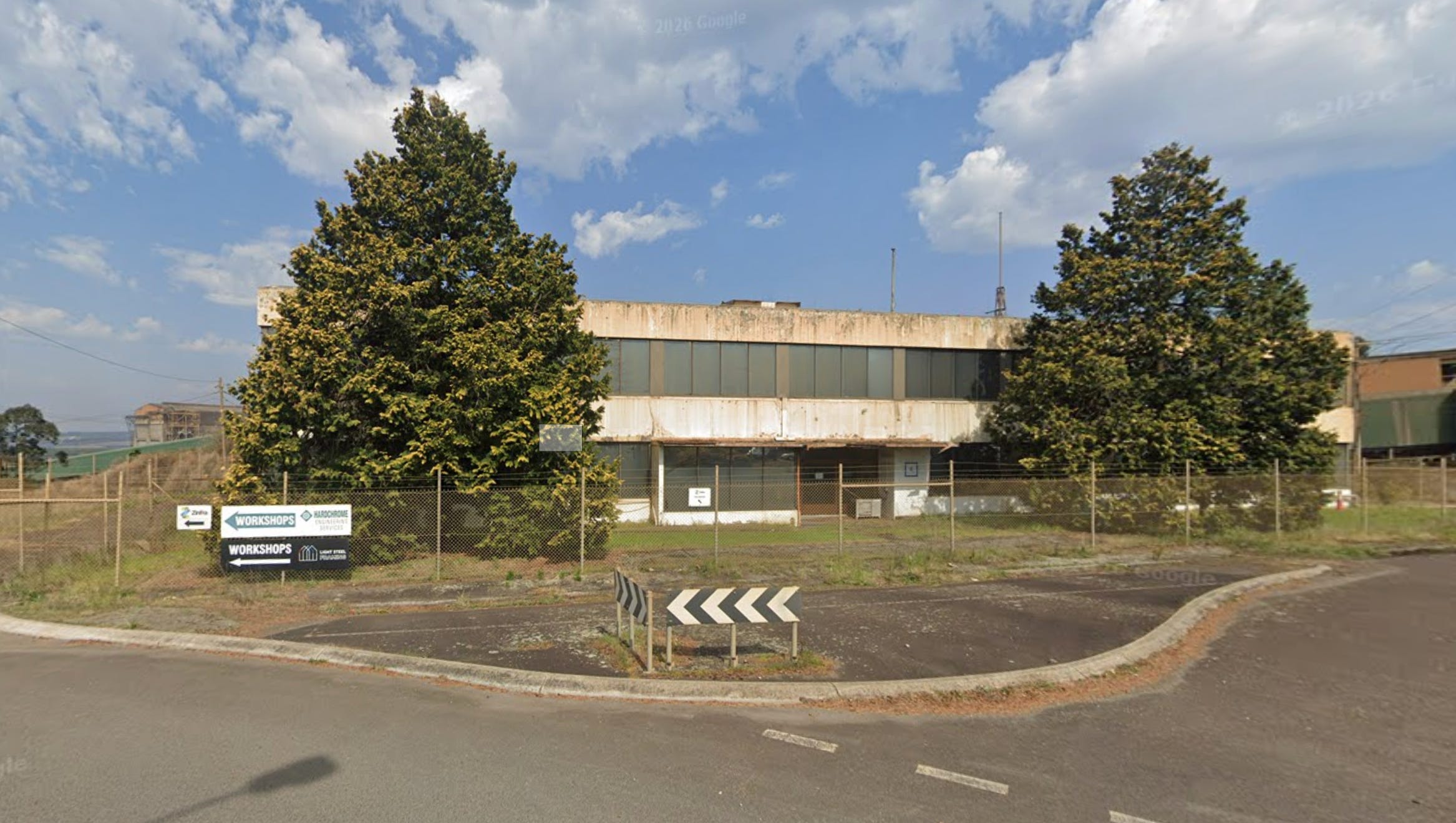
There’s something just very funny about this to me. The weird juxtaposition between the AI-generated image and the reality. Possibly because I’ve spent a lot more time in buildings that look like 30 Yallourn Dr than I have buildings with ionic columns.
I assume (hope) that the coffee catchups are real, and people have enjoyable conversations about their memories of Yallourn.
I just hope no boomers are catfished by the AI “Sir John Monash Museum”.
An unlikely story of coal
I spend an unreasonable amount of time trawling libraries and the internet for stories about Australia’s electricity history. Occasionally frequently exploration into this history veers off into adjacent territory like coal mining. Coal and power generation in this country have been inextricably linked for most of the twentieth century.6
In this vein, I stumbled across a podcast on the history of coal mining in Australia which was informative and otherwise fairly uncontroversial… except for the opening where the host tried to link the history of Australia to that of coal by pointing out that HMS Endeavour was originally a merchant collier called the Earl of Pembroke.7
This was news to me, and is now my new favourite little tasty tidbit of fact which I will insert unrequested into conversations at dinner parties, barbecues and playgrounds.8
But also I find it absurdly funny to try to tie the commercial history of Endeavour into Australia’s history of coal. That is a very long bow to draw, even for the podcast of a right wing think tank.
The fact that Endeavour started life as a collier is unrelated to Australia’s large coal reserves. The British did not know this when they set sail in 1768, and nor did they choose the Earl of Pembroke because it was a collier.9
The unremarkableness of Endeavour’s earlier life is further reinforced by its life after the Pacific voyage — Endeavour was used to transport troops and cargo to the Falkland Islands and was involved in the American Revolution where it was sunk off the coast of Rhode Island.
Guess they preferred not to link Endeavour’s history of facilitating colonial conquests to Australia’s mining history.
He also published a separate book dedicated to the history of Liddell, however copies are exceedingly hard to come by.
As spotted over at The Energy.
We’ve been a decade away from fusion for a few decades now.
If you’re wondering “Alex, why did Facebook serve you this content?” It’s probably because I spent too long hovering on a Ralph Babet post suggesting that universal suffrage should be revoked because “people don’t understand preferential voting” (along with some other insane right wing bullshit), and then people in the comments confidently but incorrectly explaining preferential voting. Other (sane) commenters pointed out that adult Ralph Wiggum wouldn’t be in office without universal suffrage.
Don’t get me wrong, local council representation is a fundamental component of a functioning society and healthy democracy. But based on my local councillors it seems the criteria are: 1. live in the area, 2. have a heartbeat, 3. survive pre-selection, 4. convince at least a handful of voters that you have somewhat more personality than a cucumber.
EXCEPT OF COURSE TASMANIA. But that’s a whole other story.
I found the content of the actual podcast generally quite reasonable and informative, and the guest knowledgeable (he should be, he wrote two whole books on the topic!). The Menzies Institute has perhaps unsurprisingly indulged in what we shall kindly describe as editorialising, including the longest of bows in the introduction. “We were desperate for more coal” — I mean, yes. We were desperate for rather a lot of things during the war years and in the years afterwards while supply chains were still recovering.
Not sure if there’s a generational thing here, because while I consider my Australian history knowledge fairly reasonable, when I told dad I’d just learned this fact he responded with something approximating “yah duh”. Can we get a poll going, should I have known this fact? Is the origin story of HMS Endeavour a well known element of Australian history?
I assume the Royal Society was perusing Facebook Marketplace and spotted a great deal. Or perhaps all the other Marketplace sellers in the 1760s ghosted them, and the Pembroke’s owners were the only ones that responded to “is this still available?”
Looks like I will pack my copy of the James Cook biography next time I visit!
no, the building with the magnificent columns (built in 1922) is real, it was many things in the past, including the main drafting office in the latrobe valley. it is a mens shed now amongst other things, see https://www.nm.org.au/ and it has a colourfull history since SECV sold it as the old yallourn power stations A to E were demolished. the other building you have supplied a picture of is the previous Yallourn Electrical Tests building, it is about 300m to the west. i worked in there for a year ~1977.